
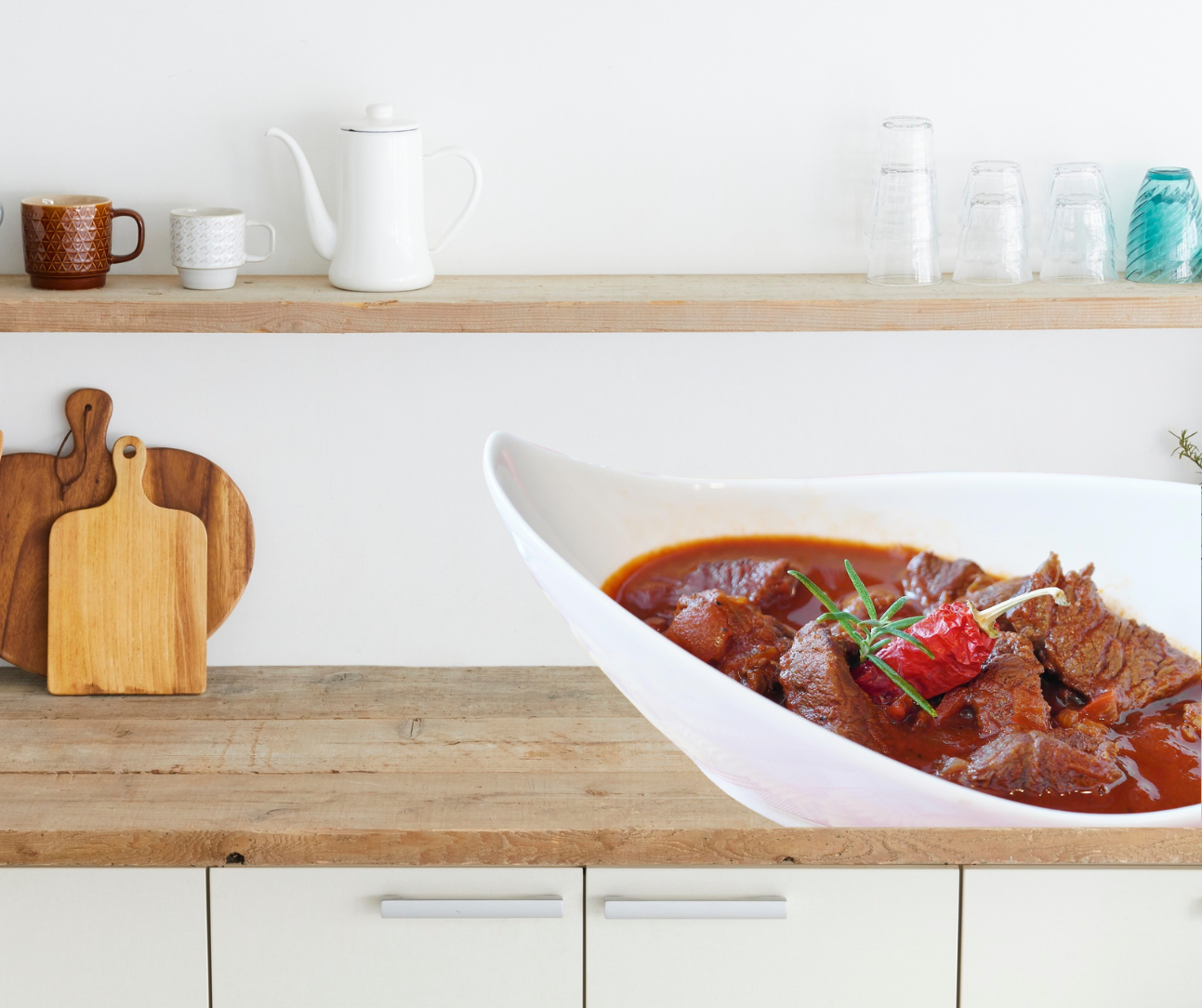
A rich and traditional Hungarian beef stew full of warm paprika flavors.
Hungarian beef stew — known simply as pörkölt — is one of Hungary’s most iconic and beloved dishes. This rich and hearty Hungarian beef stew offers more than just comfort. It stands as a symbol of tradition, history, and true Hungarian flavor.
Slow‑cooked beef is combined with a deeply seasoned paprika sauce. The warm, rustic aromas make it the perfect dish for cold winter days. It is also ideal for festive family gatherings.
A Potted History
The origins of pörkölt reach back to Hungary’s early nomadic tribes. Traditionally cooked in a kettle (bogrács) over an open fire, it was made with whatever meat was available.
The name comes from the Hungarian verb – pörkölni. It means “to roast” or “to sear.” This refers to the essential first step of browning the meat to build its signature flavor.
Over time, beef stew evolved from a simple countryside meal into a cherished classic enjoyed across Hungary.
Today, it remains one of the most authentic and traditional Hungarian dishes. It is a recipe that carries centuries of culinary heritage in every bite.
The best pairing for this main dish is sour cherry soup, as its vibrant and tangy flavors beautifully complement the savory elements of the dish. The sweetness of the cherries adds a delightful contrast, making each bite a harmonious experience. Additionally, the soup’s rich color enhances the visual appeal of the meal, creating an inviting presentation that is sure to impress anyone at the table.

Hungarian Beef Stew (Marhapörkölt)
Ingredients
Method
- 1. Sauté the onionsHeat the oil or lard in a heavy pot. Add the chopped onions and cook slowly until soft and golden — this is the base of the flavor.2. Add the garlic and paprikaRemove the pot from the heat, stir in the garlic and paprika.(This prevents the paprika from burning and turning bitter.)3. Add the beefReturn the pot to the heat. Add the beef cubes and stir well so they’re coated in the paprika-onion mixture. Cook for 5–8 minutes until the meat begins to brown slightly.4. Add vegetables and seasoningsAdd the chopped tomato, sliced pepper, salt, and black pepper. Stir everything together.5. Add liquidAdd enough water or broth to just cover the meat. Add the tomato paste and stir, covered.Stew is not soup – it should be thick and rich.6. Slow simmerCover and cook on low heat for 1.5–2 hours, stirring occasionally.Add small splashes of water only if needed.The stew is ready when the beef is tender, and the sauce is thick and glossy.
Nutrition
Notes
• Serve with nokedli, or boiled potatoes.
• A side of pickles is traditional and cuts the richness beautifully.
• This stew tastes even better the next day.